Bio-mass & Waste to Energy
-
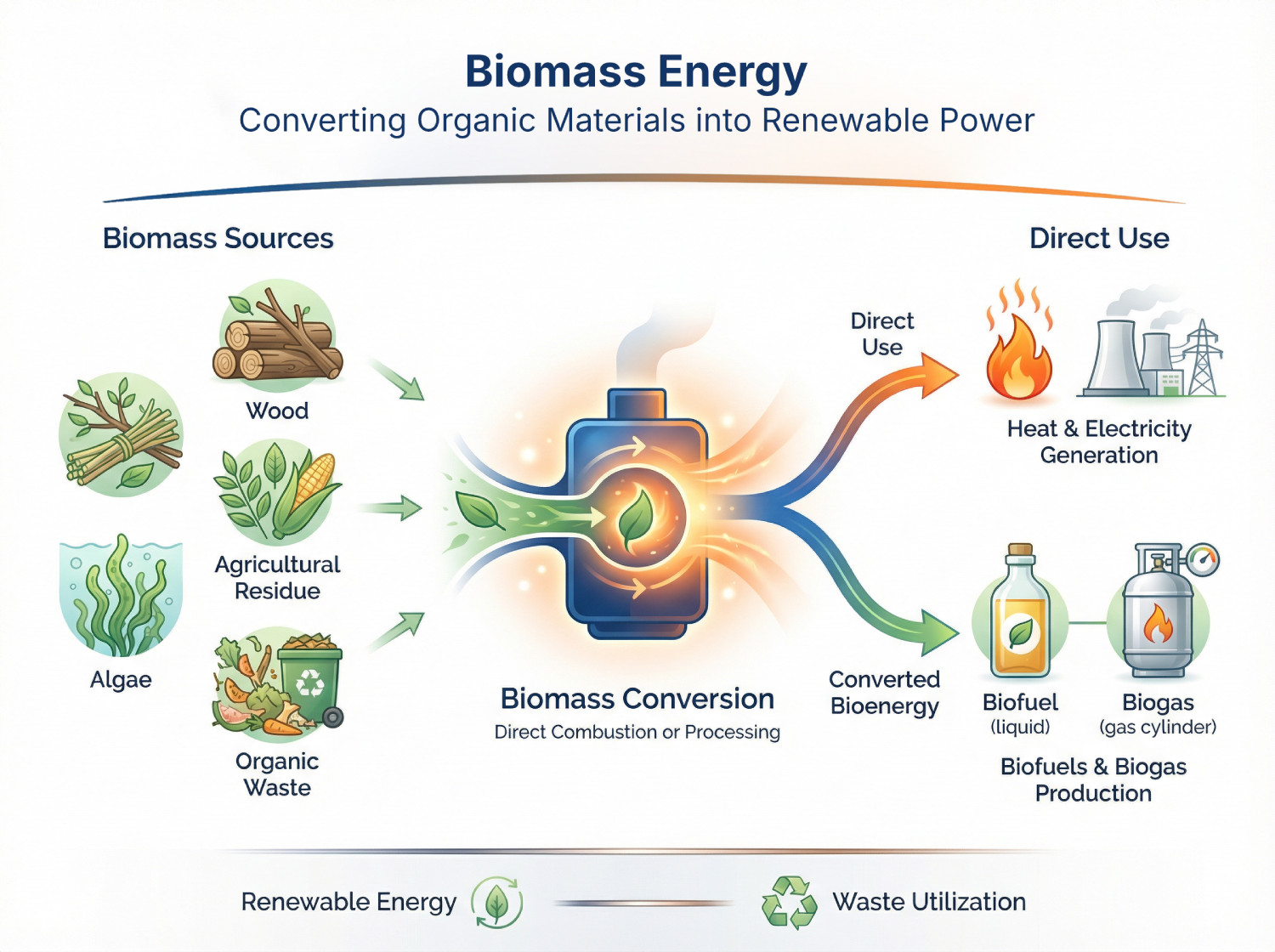
Bio-mass
Biomass refers to organic materials (like wood, agriculture residue, algae, and waste) used as fuel to generate heat or electricity. Biomass can be burned directly or converted into other forms of bioenergy, such as biofuels or biogas.
- Bio-Char
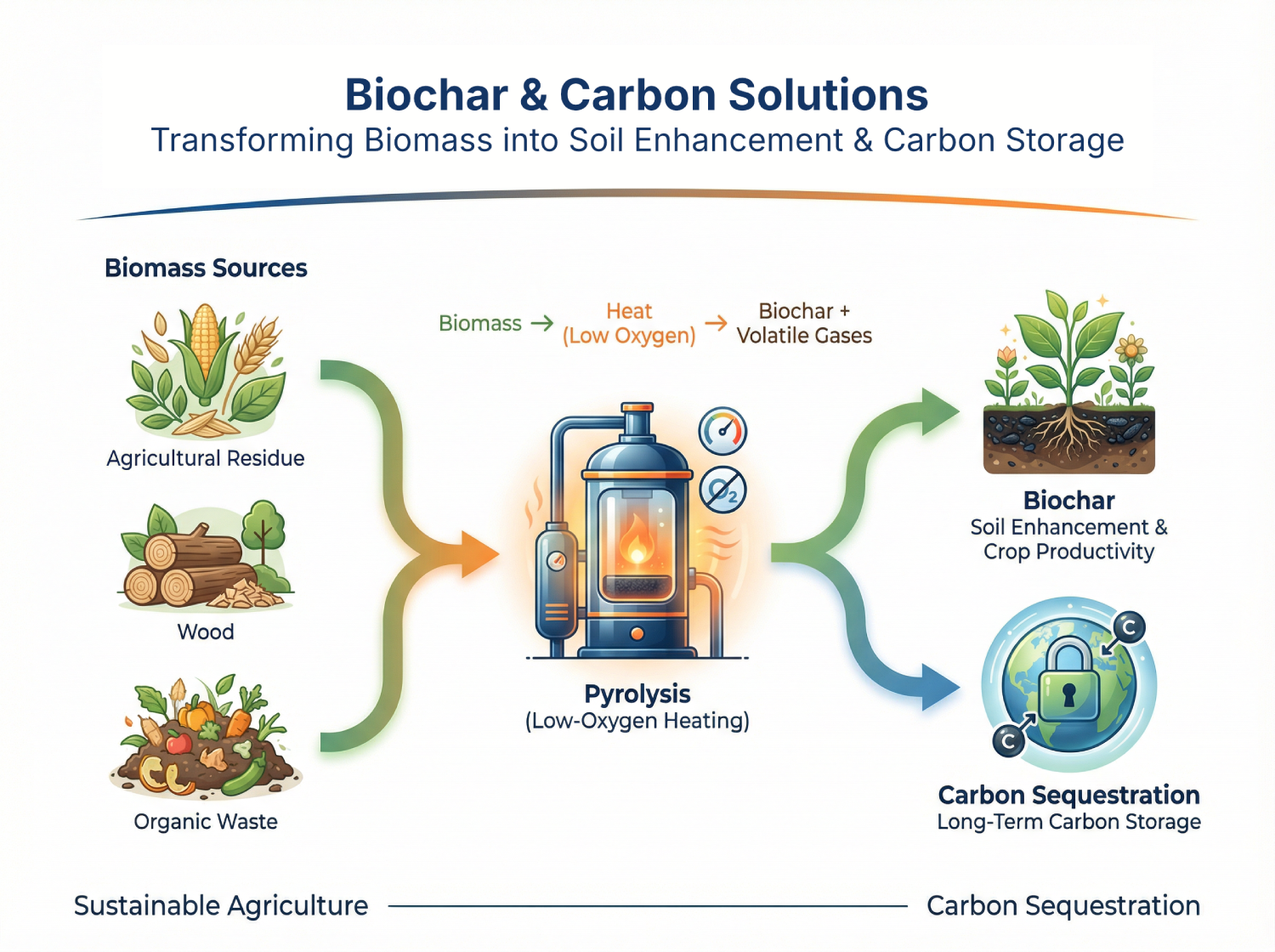
Bio-char is a form of charcoal produced by heating organic materials (such as wood, agriculture residues, or even waste) in a low-oxygen environment (pyrolysis). It is used mainly for soil enhancement but has other applications in carbon sequestration.
At 200 – 300 C hemicellulose, cellulose, and lignin in the biomass begin to decompose, releasing volatile compounds.

-
Biomass to Syngas
Gasification involves heating biomass in an environment with limited oxygen, converting it into a mixture of gases, primarily carbon monoxide (CO), hydrogen (H2), and methane (CH4), collectively known as syngas. Syngas can be used for electricity generation or further converted into biofuels.

Gasification breaks down the complex carbohydrates in biomass into simpler molecules, which can be used for power production or as chemical feedstocks for the production of biofuels.
-
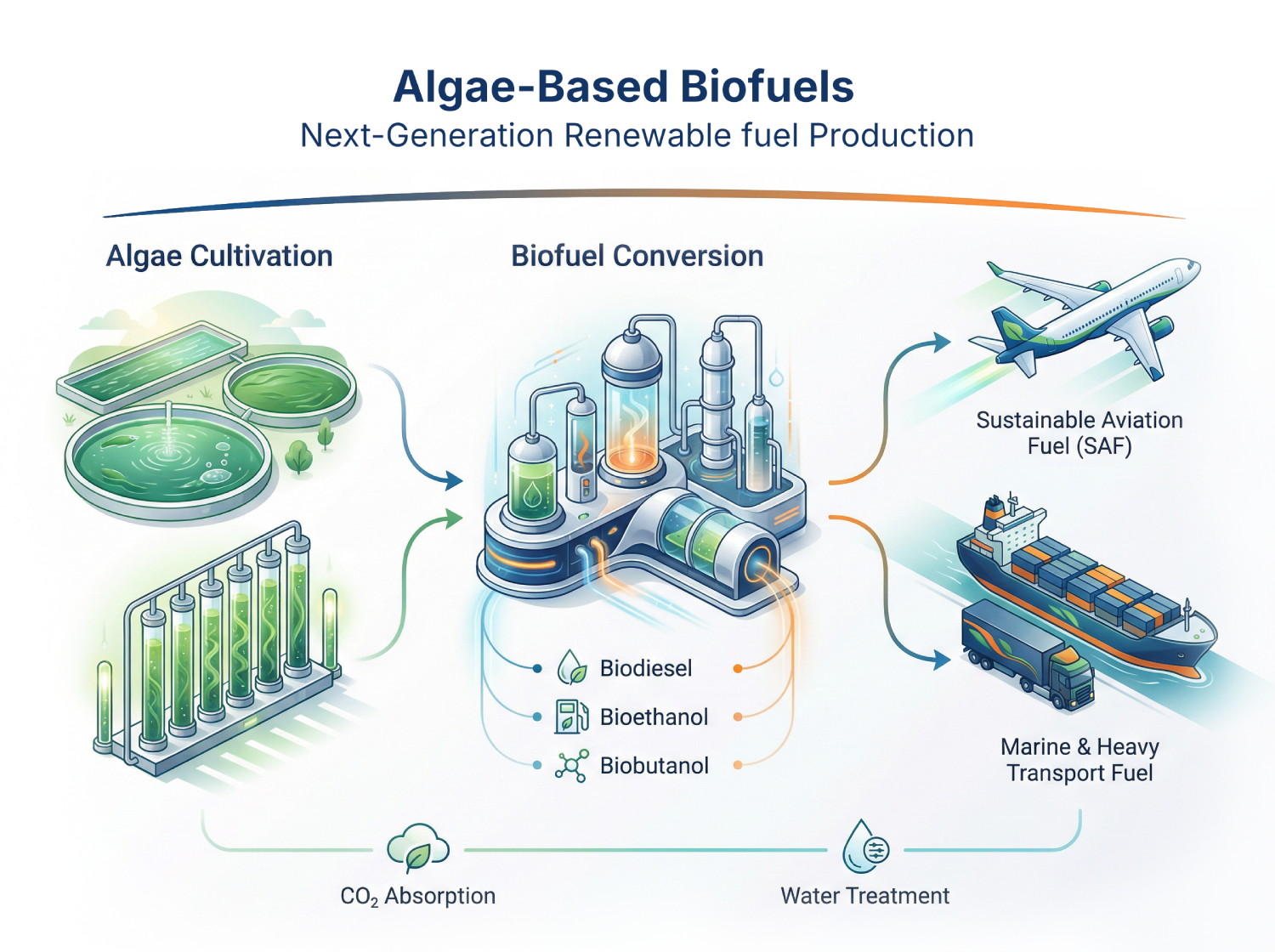
Algae Biofuels
Algae biofuels are produced from microalgae and macroalgae, which are rich in oils that can be converted into biofuels like biodiesel, bioethanol, and biobutanol. Algae are considered a promising feedstock due to their high yield per unit area and rapid growth.