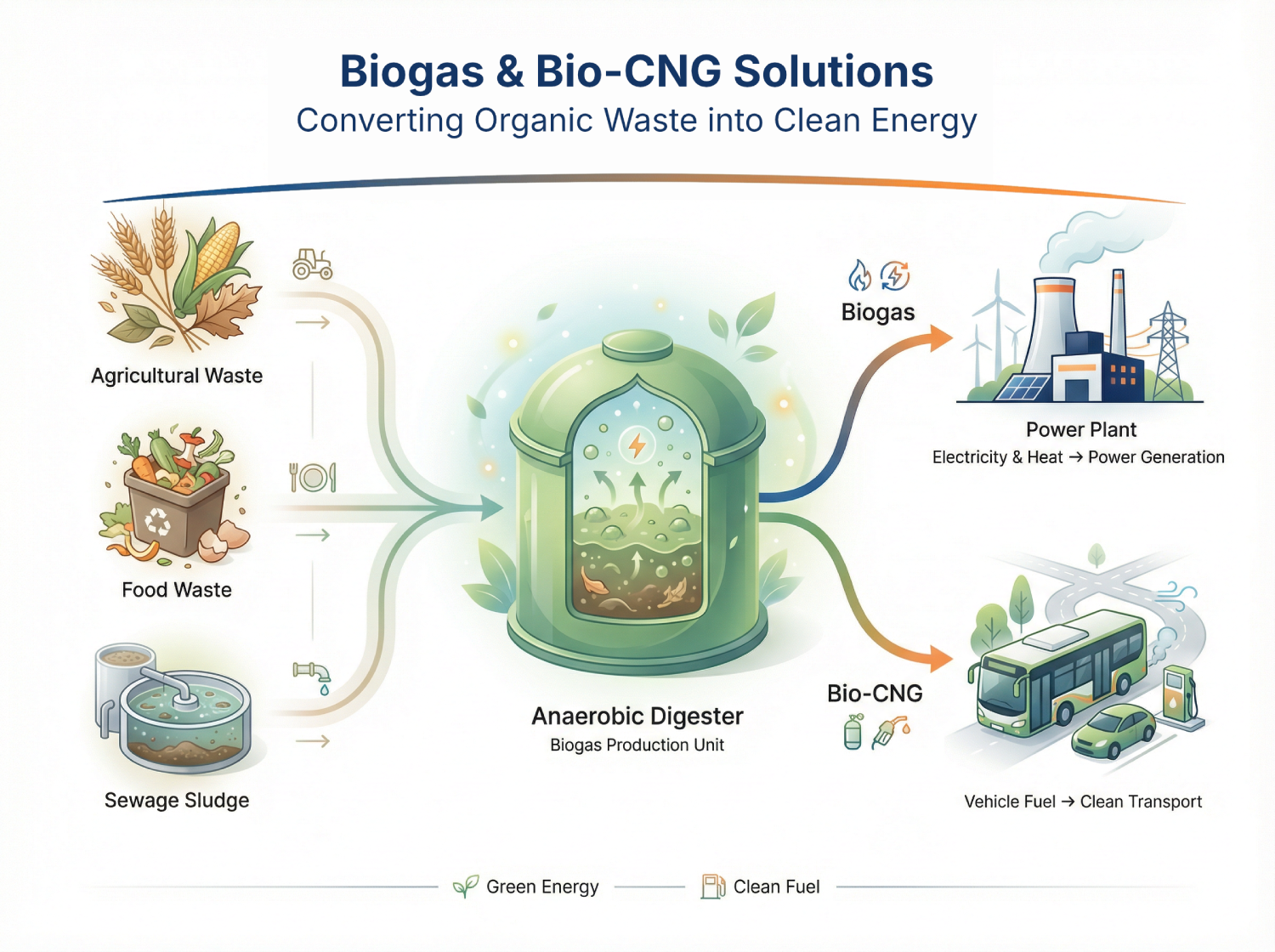
Biogas & Bio-CNG Solutions
-
Biogas
Biogas is produced through the anaerobic digestion of organic materials, such as agricultural waste, food scraps, and sewage sludge. The process produces methane (CH4), which can be used as a renewable energy source.
Anaerobic Digestion for Biogas Production
Anaerobic digestion is a biological process where microorganisms break down organic material in the absence of oxygen. This is commonly used to convert organic waste into biogas, which is primarily methane and carbon dioxide.

Glucose = Methane + Carbon Dioxide
In this reaction, glucose or organic waste is digested by bacteria and converted into methane (a usable fuel) and carbon dioxide. Biogas can then be used for heating, electricity, or as a vehicle fuel after purification (bio-methane).
-
Bio-CNG
A purified and compressed form of biogas. Bio-CNG is predominantly methane (95-98%) after removing impurities like CO2, H2S and water vapor. It is then compressed to high pressures for storage and transport, similar to conventional CNG.