Bioethanol
Bioethanol is a form of ethanol (ethyl alcohol) produced from the fermentation of sugars found in crops like corn, sugars found in crops like corn, sugarcane, or cellulosic materials like wood.
Fermentation is a biological process in which microorganisms (like yeast) break down sugars (usually glucose) into simpler compounds. In the case of bioethanol, fermentation produces ethanol and carbon dioxide as by products.
This reaction shows that glucose (a sugar from crops like corn or sugarcane) is fermented by yeast, producing ethanol and releasing carbon dioxide. The ethanol can then be distilled and used as a biofuel. Bioethanol is commonly blended with
Biobutanol
Biobutanol is a type of alcohol produced through the fermentation of sugars, starches, or cellulose, and it is an alternative to gasoline.
This is a similar process to ethanol production, but the fermentation produces butanol instead of ethanol, which has a higher energy content and can be used as a substitute for gasoline.
This is a similar process to ethanol production, but the fermentation produces butanol instead of ethanol, which has a higher energy content and can be used as a substitute for gasoline.
(Glucose -> Butanol + Carbon dioxide)
Biobutanol has a higher energy density than bioethanol and can be used in exiting internal combustion engines without modifications, making it a versatile fuel option.
Bio-diesel
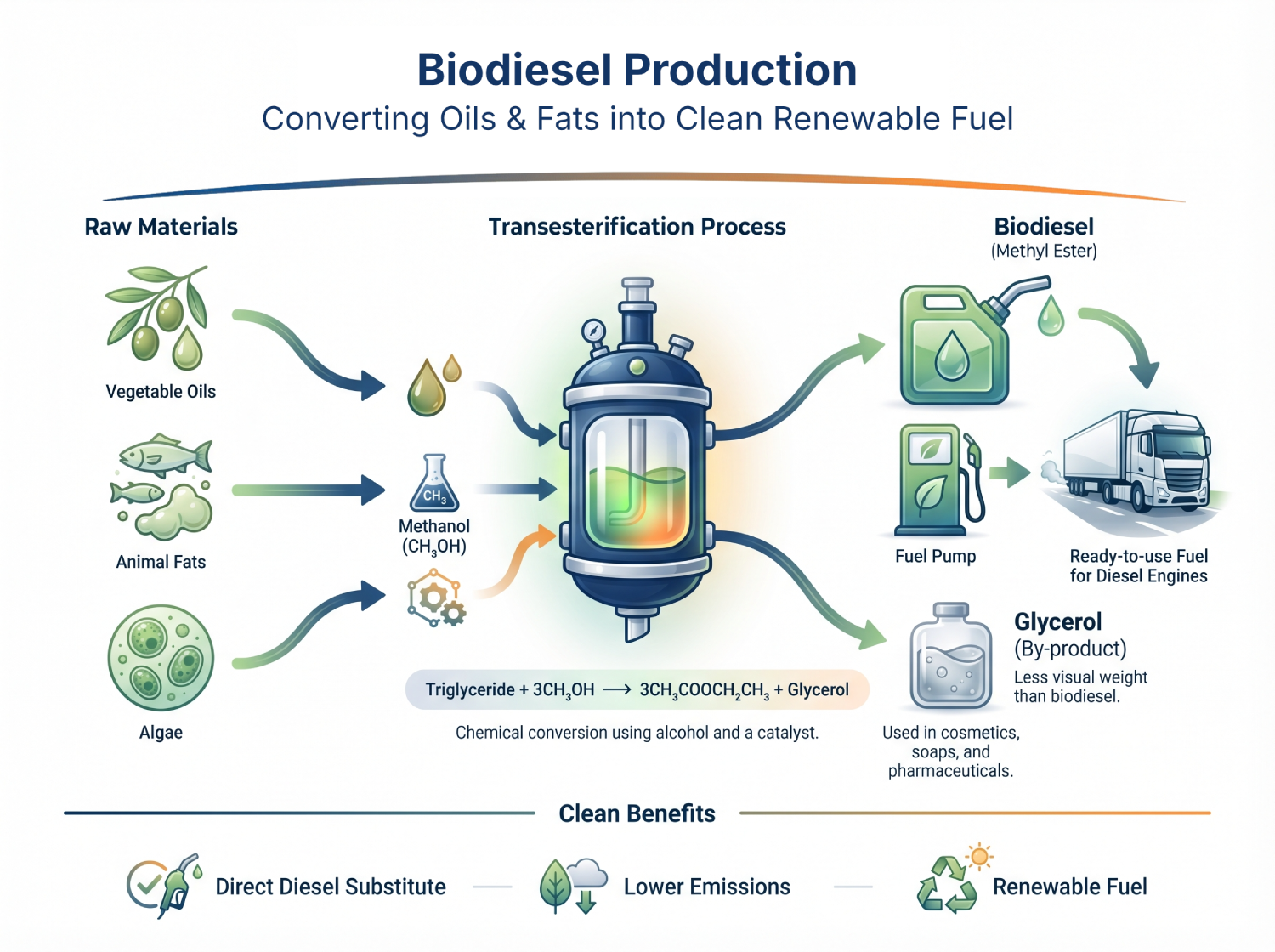
Biodiesel is produced from vegetable oils, animal fats, or algae through a chemical process called transesterification, where fats and oils are reacted with alcohol (typically methanol or ethanol).
Transesterification is a chemical reaction used to convert oils and fats (usually vegetable oils or animal fats) into biodiesel. This reaction involves the oil reacting with an alcohol (usually methanol or ethanol) in the presence of a catalyst.
In this process, triglycerides (fats or oils) react with methanol to produce biodiesel (methyl ester) and glycerol as a by-product. The biodiesel can them be used as a fuel for diesel engines.
Bio-diesel is a direct substitute for petroleum diesel in diesel engines, reducing greenhouse gas emissions and particulate matter compared to conventional diesel.